"Total investment of 1.6 billion yuan, PUE as low as 1.15, direct green electricity supply exceeds 95%, and annual electricity savings of 61 million kWh. In the East China Sea area of Shanghai Lingang, the world's first sea-wind direct seabed data center has been put into operation. ”
In 2026, everyone is happily using AI, but those running computing centers are already nearly overwhelmed. Computing power demand has surged so rapidly that cooling and power supply can't keep up, and the industry has reached a stage where it's all about imagination. Not long ago, someone even mentioned the concept of space computing power, launching data centers into outer space. And now, someone really has thrown servers into the sea.
This is not introducing you to a concept of a future. They have already been thrown away, investing 1.6 billion yuan, and throwing them into the sea means more than 2,000 servers. Right in Shanghai's Lingang, east of Xiaoyangshan, in the East China Sea, 10 meters below a sea platform, 192 cabinets are packed into a four-story underwater machine room, continuously running computing power. The total weight of the entire item is 1,950 tons, roughly equivalent to the weight of 1,300 family cars. Within 500 meters of the tower are more than 50 wind turbines, directly connected to wind power, with a green power supply rate exceeding 95%.
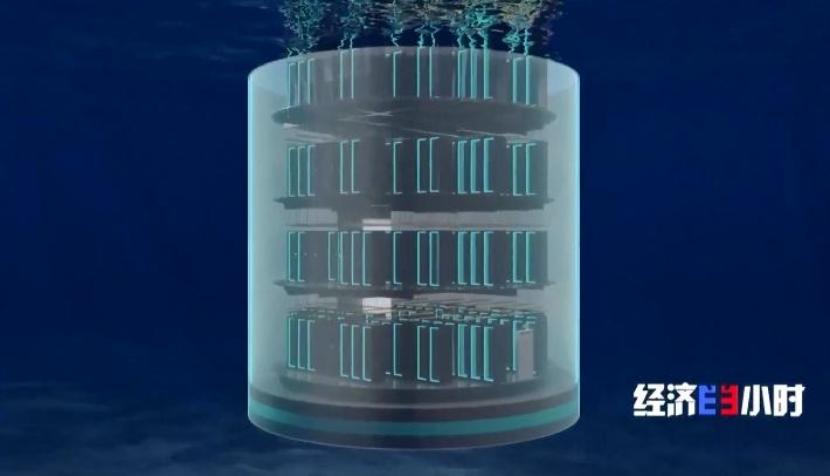
Let's first look at a few stats. PUE (Data Center Energy Efficiency Index, the closer to 1, the better): This underwater data center is 1.15 (this number is impressive, we'll explain in detail later), and the national average is 1.48. Fresh water consumption: zero. Land area: 200 square meters; the same scale on land is 2,000 square meters. After full-scale operation, annual electricity savings of 61 million kWh will be achieved.
In other words, submerging servers in the sea not only prevents damage but also saves electricity, water, and land compared to placing them on land, with a lower failure rate.
A few days ago, CCTV aired this news. After watching it, I dug into the background and found the story to be much more interesting than what the news had described.
Looking ahead, this is a route that has been explored and validated for many years. Repeated verification is the only way to ensure that computing power can be safely thrown into the water. Looking ahead, the computing power center and green energy are intersecting on this path, making a crucial move in a grand game.
It's worth starting over.
01: Why do they have to sink the servers into the sea?
Data centers can be both complex and simple. Simply put, it solves two core problems: power supply and heat dissipation.
Everyone knows servers need electricity, but what many people don't realize is that the electricity used for cooling servers may be about the same as the electricity consumed by the servers themselves.
There is a core metric in the industry for measuring data center energy efficiency called PUE, or Power Usage Effectiveness. The algorithm is also very intuitive: the total electricity used by the entire data center divided by the electricity consumed by IT equipment (servers, storage, networks). If PUE is 2, it means the server burns 1 kWh to work, while the air conditioner and other supporting facilities burn another 1 kWh to help dissipate heat and keep running.
Ideally, PUE should be 1, meaning all electricity is counted and not a single kWh is wasted on cooling. But in reality, it can never reach 1, only infinitely close.
The average PUE for data centers nationwide is about 1.48. In other words, for every 3 kWh of electricity burned in data centers across China, 1 kWh is used for air conditioning.
In 2024, global data center electricity consumption is approximately 415 terawatt-hours, accounting for 1.5% of total global electricity consumption. The IEA (International Energy Agency) predicts that by 2030, this figure will more than double to 945 terawatt-hours. And that's just the energy consumption of traditional data centers; with the advent of AI, things have become even more extreme.
It turned out that a standard CPU server consumed about 300 watts of power. If you switch to a GPU server running AI training, the same machine's power consumption could reach 3000 watts, more than ten times higher. The IEA report states that electricity consumption for AI-dedicated servers is expected to grow by 30% annually.
A person who has worked in the data center industry for 20 years told me a vivid picture: an office building has enough rooftop outdoor units to supply the entire building, but if you convert it into a data center, the cooling requirements will increase exponentially. The air conditioning and power supply equipment can even take up more space than servers. Even if the rooftop and downstairs plaza are filled with outdoor air conditioning units, it might not be enough to dissipate heat.
So for years, the global data center industry has been pondering the same thing: how to find cheaper cold sources. Everyone's answer was surprisingly unanimous: seek it out naturally.
Previously, Facebook tried building its data centers in high-latitude regions of North America, the closer to the Arctic Circle, the better, as natural gas temperatures are lower. A few years ago, Tencent built its data center in a cave in Guizhou, where the temperature is constant year-round. In this matter, the first criterion for big companies in site selection is not transportation or talent, but where it is cool.
China's "East Data, West Computing" project follows the same logic: building data centers in places like Inner Mongolia, Guizhou, and Gansu. The west has electricity, coal is cheap, and there are plenty of new energy sources; The weather is cold, and places like Ulanqab spend most of the year below zero, so naturally it has strong heat dissipation. Eight major computing power hubs and ten data center clusters essentially chase cheap electricity and free cold supply westward.
What about eastern cities?
Shanghai, Shenzhen, and Beijing are precisely the areas with the strongest demand for computing power. Financial transactions, AI inference, cross-border data processing—many businesses are highly sensitive to latency. Data can't always be recalculated in a cave two thousand kilometers away in Guizhou and then sent back. But these cities have the most expensive land, the most rigid energy consumption targets, and unbearably hot summers.
That's why it's the sea.
Seawater has an average annual temperature of only about 15°C, is highly fluid, and its heat dissipation capacity is dozens of times that of lake water. Moreover, offshore wind power is being built on a large scale, with electricity right next door. Cold sources and power supplies—the two most essential things for data centers—are provided to you at sea.
Logically, sinking servers into the sea is actually the most natural answer.
02: The process of bringing computing power into the ocean is divided into several steps
The idea of placing data centers undersea was not first thought of by the Chinese.
In 2015, Microsoft launched a project called Project Natick. The first experiment had a fairly straightforward approach: first, throw one down to see if it would break. They sank a cylindrical sealed capsule about 2.4 meters in diameter to the bottom of the Pacific Ocean, which housed servers. They ran for 105 days to see if the servers could really be soaked underwater.
The conclusion is that it works.
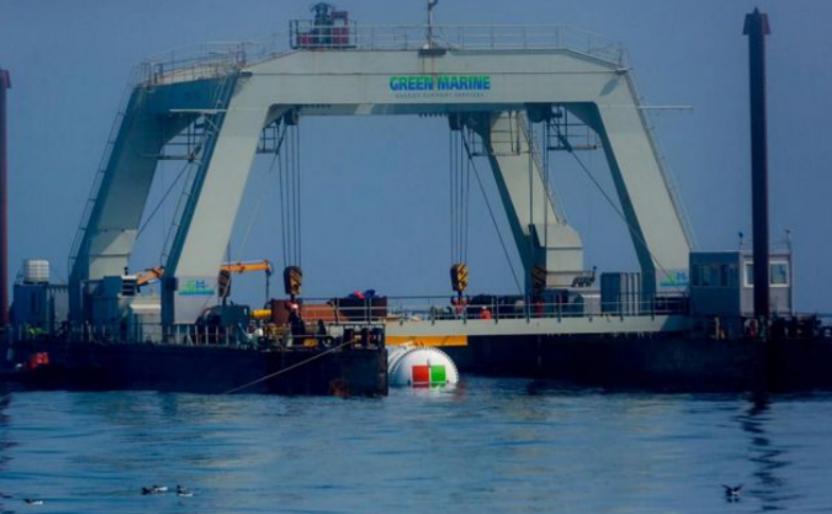
In 2018, Microsoft entered the second round and officially deployed it. In the waters off the Orkney Islands in Scotland, a sealed container containing 864 servers was sunk to a depth of about 35 meters in the North Sea. Powered by local tidal and wind energy, the seawater cools naturally, and then it's left alone.
Two years later, in 2020, Microsoft pulled this out of the sea, and when they opened it, the data was astonishing.
Out of more than 800 submarine servers, only 6 failed, with a failure rate of about 0.7%. At the same time, Microsoft set up a control group on land with 135 servers, also running for two years, with 8 failures and a failure rate close to 6%. The failure rate on the seabed is about one-eighth that of on land.
This is an unconventional result. Microsoft explained that the sealed cabin is filled with dry nitrogen, with no oxygen, no moisture, no dust, and no vibration or temperature fluctuations caused by human movement. Servers operate in an almost sterile environment, greatly slowing hardware aging.
No one touches, no one looks, no dust, no one opens the door to walk in, and nothing happens. A place completely devoid of humans is probably the ideal working environment for a server.
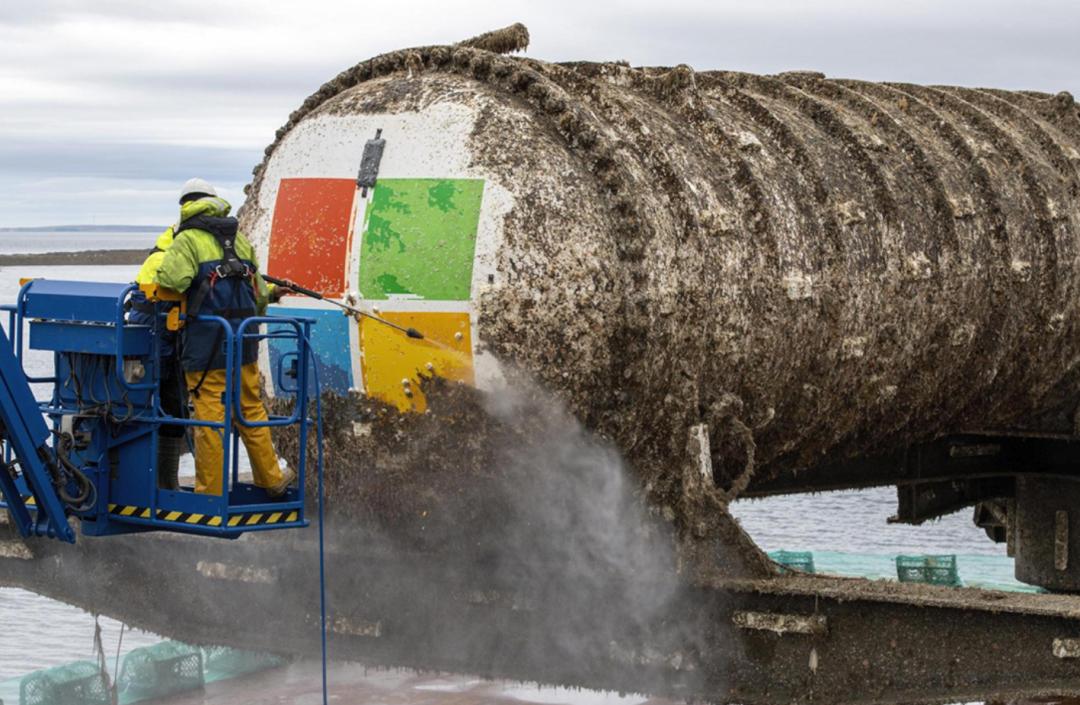
Microsoft's experiment proved one thing: seabed cooling is reliable. What followed was done by the Chinese.
In 2020, Hailanxin, a domestic listed company specializing in marine equipment, acquired a Canadian deep-sea equipment team. This team previously worked on Microsoft's Natick project and, more importantly, has accumulated over 20 years of experience in the deep-sea field. That set of know-how gained from experience is crucial: where where microorganisms grow, what kind of water flow and geological conditions in which sea area, how to design joints to withstand 20 years underwater without problems.
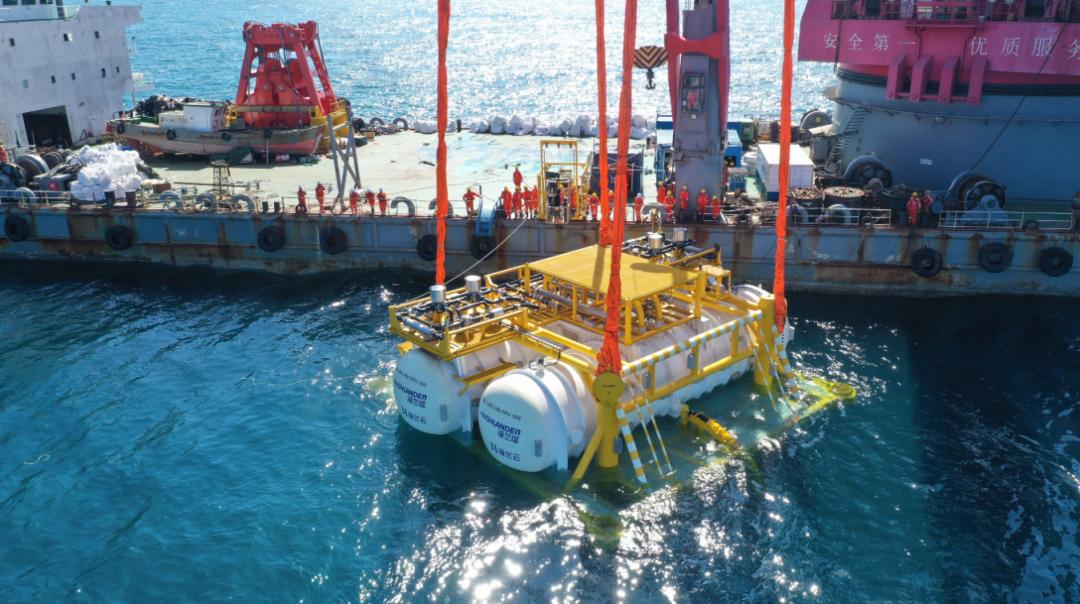
With this technological foundation, the first commercial underwater data center was established in Hainan.
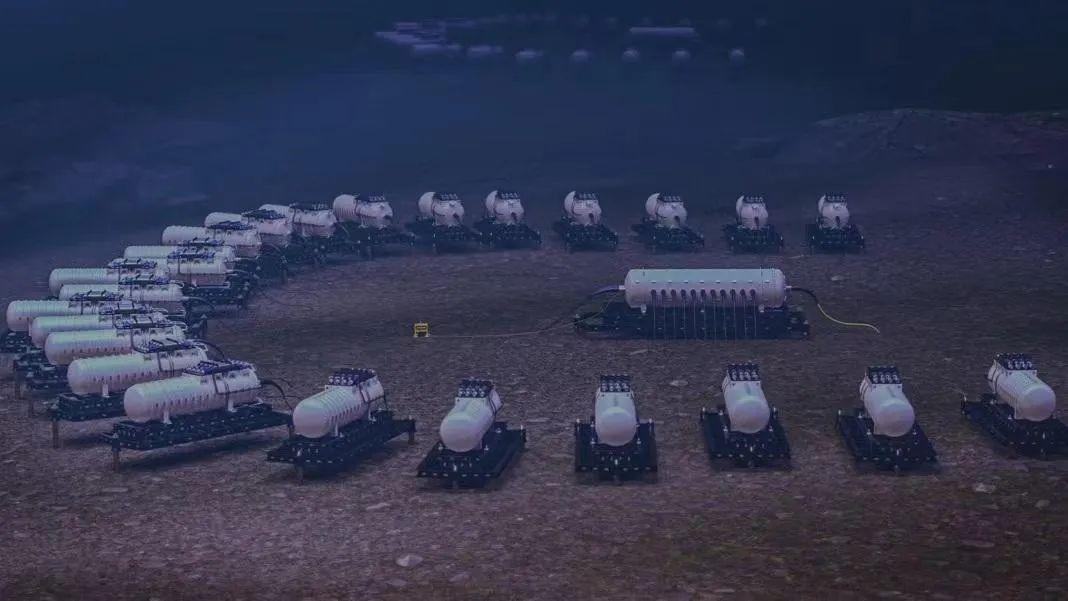
The site is located at Qingshui Bay in Lingshui, Hainan, about 3 kilometers from the shore, with a depth of 40 meters. The design concept is to sink a sealed tank to the seabed, connect it to the onshore control station via submarine cables, and cool it naturally with seawater. It will be put into trial operation in 2022.
After running for more than three or four years, several core data points have come out. PUE is less than 1.2, far better than the national average of 1.48. Cooling energy consumption is reduced by over 90%, meaning about 3 million kWh of electricity is saved annually, about 15,000 tons of fresh water are saved, and the onshore station occupies only 400 to 500 square meters, roughly one-fifth the size of a terrestrial data center of similar size.
It sounds like moving data centers underwater would solve everything, but that's far from it.
In this generation of Hainan, the cold source has been solved and costs have been validated, but the power supply remains a weak point. Hainan's power grid mainly relies on thermal power, accounting for over 70%. The underwater data center uses mains electricity from the shore; just one submarine cable to connect costs tens of millions of yuan in optical cables. Daily operating costs are indeed low, but when you factor in the heavy asset investment during the construction period, the economics aren't very good. Plus, thermal power supply isn't green enough in the long run.
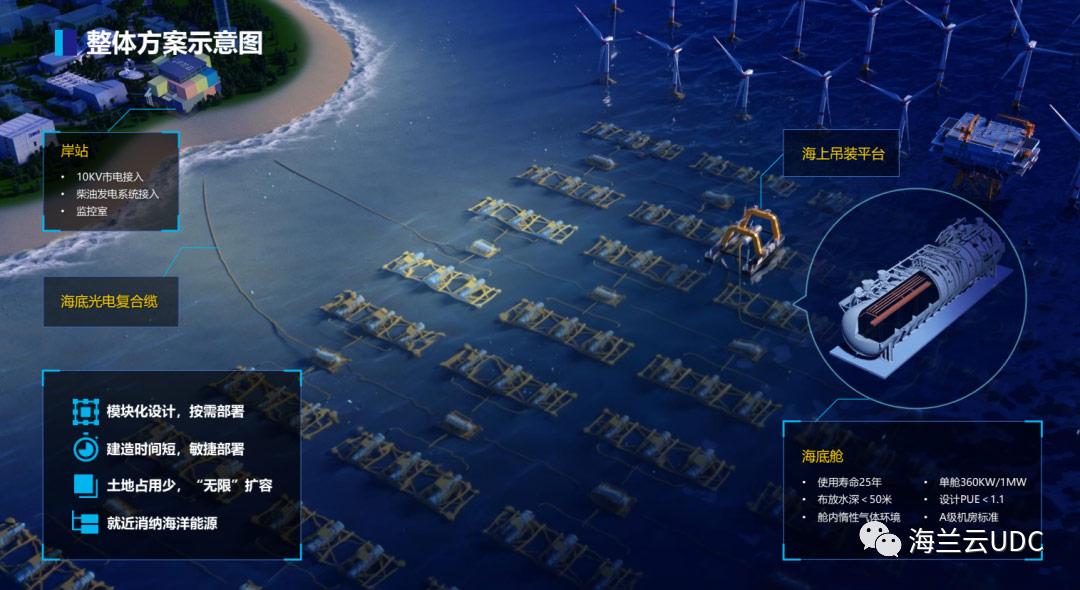
How to handle both the cooling source and the power supply at the same time. So the next step was Shanghai.The Shanghai project takes a completely different approach: it is located in the sea east of Xiaoyangshan, Lingang, just 500 meters from an existing 200-megawatt offshore wind farm. The wind power is directly connected to the data center via submarine cables, without going through the onshore grid, using only real green electricity. The cooling source and power supply were finally solved simultaneously.
The key changes are in the cost structure. The Hainan generation needed to build their own shore stations, lay cables, and lay networks, and these infrastructure accounts for a large proportion of total investment. In this generation in Shanghai, the wind farm already has the stations, cables, networks, and even some electrical equipment, so they can be directly reused. Just in this area, investment has dropped by several tens of percent.
The reason this matter has taken so long lies in the greater difficulty beyond technical skills, because it is something almost no one has done before, and many standards need to be re-evaluated from scratch.
Let's start with environmental protection. A fact few people know is that the environmental standards for underwater engineering are much higher than those on land.
If you place something that keeps heating up on the seabed, if it dissipates well, it's called cooling; if not, it heats up quickly. Previously, some people tried using lake water to cool data centers, pumping cold water from the lake to cool it down and then discharging it back. As a result, the lake water temperature rose, so fortunately, it didn't turn into fish soup, but the fish grew noticeably faster, disrupting ecological balance and failing environmental standards.
The standards for sea are stricter. Industry insiders told us that in this detail, environmental protection requires that the water temperature around the data center (about 1 meter) should not exceed 0.1 degrees Celsius. 0.1 degrees is already very strict, but just meeting the standard is not enough. You also need continuous monitoring capabilities and contingency plans for extreme situations—not everyone has these capabilities.
Hailan Cloud, which is working on this project, is a subsidiary of Hailanxin, a listed company in the marine sector. The parent company has been deeply involved in marine technology for many years, having worked on marine observation, underwater equipment, and maritime communications. If it were a company without a background in marine engineering, the environmental protection alone might have been stuck.
As for the server side, those willing to throw expensive servers into the water truly trust this solution. These devices aren't cheap, and if they get damaged, it's truly heartbreaking. Moreover, this kind of project naturally requires reliable hardware at every step. Don't expect to send someone to replace several cards every few days—it's a hassle.
All these factors combined ultimately brought together major companies from all sectors in the chain, such as Shenergy Energy, which operates wind farms, and the big players in East China's energy sector; Shanghai Instrument & Electronics, a well-established industrial group, is responsible for servers here; Communications are handled by Shanghai Telecom, so this needs no further explanation. Overall, marine engineering, energy supply, computing power operations, and server manufacturing all come together here. If one link fails, the whole process won't work.
03: Wind + Power—How Much Imagination Is There?
Looking ahead, the Shanghai project is just the beginning; what truly makes this route seem to have great potential is the integration with large-scale offshore wind farms that follow.
Shanghai is planning a deep-sea offshore wind farm with a total capacity of 4,300 megawatts. Currently, a medium-to-large data center in Shanghai is about 20 megawatts in scale, meaning that the power generation capacity of this wind farm can theoretically supply more than 200 medium and large data centers.
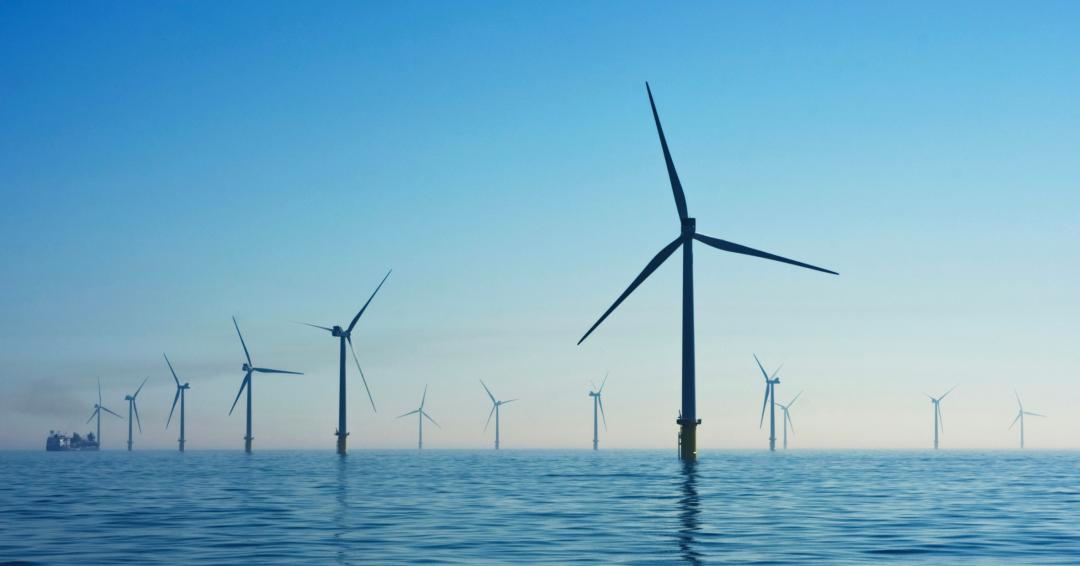
Of course, it's not entirely for data centers, but some have calculated a relatively safe ratio: about 15% of the wind farm's maximum power generation capacity is enough to supply a large-scale offshore computing cluster. What does 15% mean? Even if only the fewest wind turbines are running, the electricity is stable, no need to add storage, no worries about fluctuations, making it the best source of electricity.
Based on this ratio, 15% of 4300 megawatts is about 600 megawatts. A 600-megawatt computing power center, located offshore, supplied directly by green electricity, with seawater naturally cooled.
Here's a very important economic point: offshore wind farms are over 100 kilometers offshore, and electricity is transmitted from sea to land, with transmission losses exceeding 10%. But computing power doesn't need to be transferred; you convert electricity directly into computing power at sea, and the result is transmitted back via fiber optics, with almost no transmission loss. Power loss is over 10%, data loss is almost zero. Similarly, sending something back from the sea is much more cost-effective than sending electronics.
Think even further. The base of an offshore wind turbine is called a tower, which is the large pillar embedded in the seabed. Nowadays, offshore wind turbines are getting bigger and larger, with the power of a single turbine increasing from two or three megawatts on land to 12 to 20 megawatts offshore. The diameter of the hair dryer has also increased, now about 18 to 20 meters.
Columns with diameters of 18 to 20 meters, hollow inside, quite spacious, but no one had ever thought about what could be done inside.
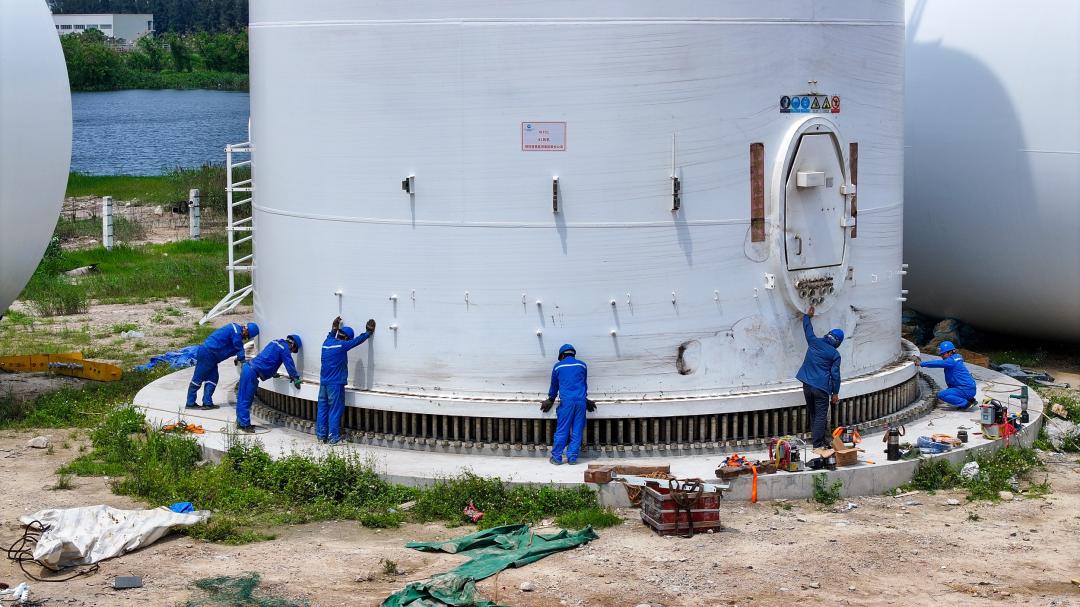
What if you reserve space inside a wind farm for servers? No need to build additional structures or lay cables; the wind farm's power supply facilities, submarine cables, and network connections are already there, so it's like building a machine room when building a house.
According to this approach, the overall construction cost is several tens of percent lower than on land, not even counting electricity prices. If the on-site consumption price for offshore water can be negotiated at 0.3 to 0.3 to 0.1 per kWh, then overall operating costs can be reduced by another half.
A fan with blades on top generating electricity, and servers running inside the pillars below. Wind turbines scattered across the sea are each a small computing power factory, requiring no mains electricity, no fresh water, and no personnel to guard them. Perfect.
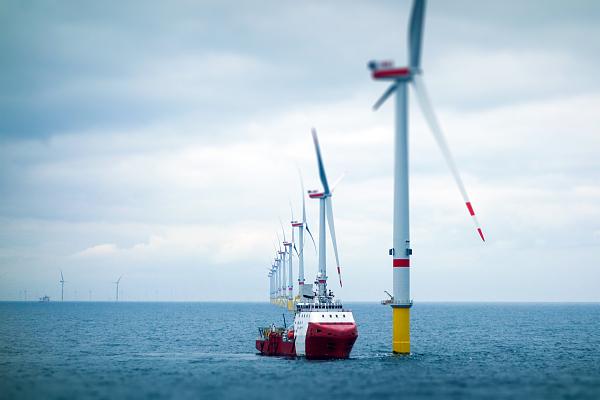
This sounds like science fiction, but every step of the underlying logic is solid. At this point, you'll find that the two major industries of energy and computing power are closely intertwined. Wind power needs to be consumed locally to improve economic efficiency, computing power needs cheap green electricity and free cold sources. These two things originally went their separate ways, but now they converge at sea.
China has great confidence in doing this: offshore wind power. China has the world's largest installed offshore wind capacity, the lowest generation costs, and the most mature construction supply chain. If someone can tie the computing center and offshore wind power together, it's most likely in China.
Counting east and west is heading west, chasing coal and cold; now some people are heading east, chasing wind and sea. Both approaches solve the same problem: to provide computing power with the cheapest electricity and the most free cooling.